

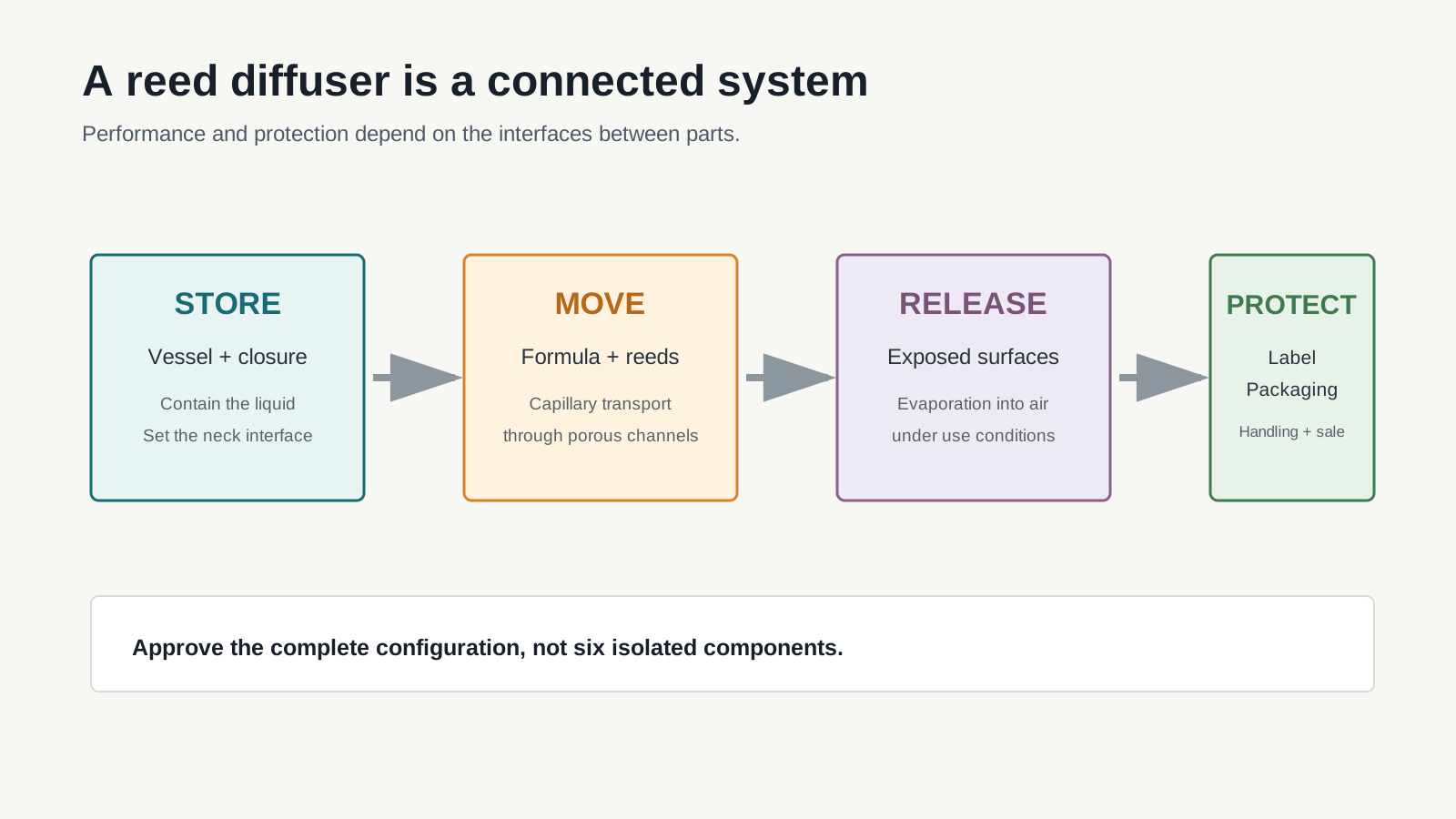
A reed diffuser usually has six component groups: a vessel, fragrance liquid, porous reeds, a closure or collar system, labeling, and protective packaging. The liquid rises through the reeds by capillary action and evaporates from their exposed surfaces. Because every part affects another, buyers should specify and test the diffuser as a system, not approve each component in isolation.
The familiar phrase "bottle, oil, and sticks" is accurate but incomplete. It leaves out the interfaces that cause many development problems: whether the formula climbs through the chosen reeds, whether the neck and closure control leakage, whether decoration tolerates the liquid, and whether the retail box protects the assembled product.
Reed Diffuser Parts at a Glance
| Component | Primary job | Buyer question |
|---|---|---|
| Vessel | Store the fragrance liquid and present the product | Is its material, capacity, neck, base, and decoration suitable for the intended system? |
| Fragrance liquid | Carry and release the fragrance composition | Is the complete formula compatible with the reeds, vessel, closure, label, and market requirements? |
| Reeds | Move liquid upward and create evaporation area | Which material, dimensions, count, and finish work with the tested formula? |
| Closure and collar | Seal for transport, manage the neck, and finish the presentation | Which parts seal, which are decorative, and how does the consumer open and assemble the product? |
| Label and decoration | Identify the product and communicate required information | Will the print, coating, adhesive, and placement tolerate handling and possible liquid contact? |
| Retail and transit packaging | Protect, orient, and present the product | Does the pack control movement, leakage consequences, and reed storage through distribution? |
How Does a Reed Diffuser Work?
A porous reed touches the liquid in the vessel. Adhesion, surface tension, and the reed's pore structure draw the liquid upward through capillary action. At the exposed reed surface, volatile parts of the formula enter the surrounding air. Air movement then carries those molecules through the room.
Research from the University of Wisconsin-Milwaukee describes wick-based air freshening as a combination of capillary transport and evaporation. It also notes that molecules do not all behave identically over time. That is why a diffuser cannot be judged from fragrance percentage or reed count alone.
Think of the system as four jobs:
- Store: the vessel and closure contain the liquid.
- Move: the reeds transport liquid upward.
- Release: the formula evaporates from exposed surfaces.
- Protect: labels and packaging preserve the product through handling, sale, and use.
Weakness in any job changes the customer experience. A formula that moves poorly can smell weak. A fast-releasing system can consume liquid quickly. A beautiful vessel with an unsuitable closure can leak in transit. A stable product can still reach the shelf damaged if the insert allows movement.
1. The Vessel: More Than a Decorative Bottle
The vessel stores the formula, establishes the product's visual weight, and creates the neck opening through which the reeds pass.
Define:
- material and finish;
- nominal and practical fill capacity;
- external dimensions and base stability;
- neck opening and closure interface;
- wall, base, and rim condition criteria;
- color and acceptable variation;
- decoration method and placement;
- compatibility requirements;
- retail-box orientation and fit.
A wider opening exposes more liquid directly to air and leaves more space around the reeds. A narrow opening changes the fit of closures and reed bundles. Neither is automatically better; the opening belongs in the tested system.
For decorated vessels, test the finished combination. A coating, ink, adhesive, or metallized finish may react differently from the undecorated substrate when exposed to the formula, wiping, or handling.
2. The Fragrance Liquid: Formula, Not Just Fragrance Oil
The liquid is typically a formulated mixture rather than fragrance concentrate poured directly into a bottle. It may combine a fragrance composition with a diffuser base or carrier system and other permitted ingredients, depending on the intended product.
The buyer should define or ask for:
- intended fragrance and olfactive direction;
- formula identity and revision;
- appearance and color expectations;
- compatibility with vessel, closure, reeds, label, and decoration;
- agreed performance test conditions;
- required safety, classification, labeling, and market documentation;
- batch and traceability approach where applicable.
Avoid choosing a formula using one headline number. A higher fragrance percentage does not guarantee stronger room performance. Viscosity, volatility, fragrance composition, reed structure, exposed surface, temperature, airflow, and room conditions all influence what a user perceives.
IFRA places reed diffusers within a defined end-use category for applying fragrance ingredient standards. IFRA conformity is one part of fragrance safety management; it does not by itself establish finished-product compliance in every market. The complete mixture and intended destination still need the applicable classification, labeling, notification, and documentation review.
3. The Reeds: The Product's Passive Pump
Reeds are porous transport and evaporation components. They are commonly described as natural rattan or engineered fiber reeds, but material names alone do not predict performance.
Specify:
- material or supplier reference;
- length and diameter;
- pore or construction type where relevant;
- count supplied per unit;
- natural, dyed, or coated appearance;
- straightness, finish, dust, and damage criteria;
- storage method inside the retail pack;
- formula compatibility and test reference.
More or larger reeds generally create more potential transport and exposed area, but the result is not a free increase in performance. The system may also release liquid faster. Reed count should therefore be a tested configuration, not a decorative guess.
Do not assume bamboo skewers, craft sticks, and diffuser reeds are interchangeable. What matters is whether the porous structure continuously transports the specific formula and remains usable over the intended test period.
4. The Closure, Stopper, Seal, and Collar
This is where terminology often becomes muddy. A reed diffuser may use several neck components with different jobs:
- an inner plug or stopper for shipment;
- a screw, crimp, press-fit, or other closure;
- a sealing liner or other barrier where applicable;
- a decorative collar placed around the opening during use;
- a cap used before the reeds are inserted.
The decorative part is not necessarily the sealing part. Ask for an exploded component view and assembly sequence so that everyone can see what remains on the vessel during transport, on shelf, and in use.
Test the closed product in the intended orientation and packaging configuration. The review should distinguish leakage through the closure, wicking around components, decoration damage, and liquid released after consumer opening.
5. Label, Decoration, and Required Information
The label must do more than carry a logo. It may need product identity, net contents, responsible-party information, batch details, directions, warnings, hazard information, a barcode, or market-specific language.
For products placed on the EU market, the complete mixture may trigger classification and labeling duties under CLP. ECHA explains that hazardous mixtures in scope can require a Unique Formula Identifier, or UFI, linked to poison-centre notification information. Applicability depends on the actual formula, market role, and use; it should not be inferred from a generic reed diffuser description.
Evaluate label material, adhesive, ink, varnish, and placement against the decorated vessel and finished formula. Include deliberate wipe or contact checks where appropriate. A label that looks perfect when dry can still fail after incidental liquid exposure.
6. Retail Packaging and Transit Protection
The retail pack may need to hold a filled vessel, separate reeds, closure instructions, inserts, and required information without allowing damaging movement.
Define:
- product orientation;
- insert and divider structure;
- reed bundle location and restraint;
- clearance around the vessel and closure;
- protection for decorated surfaces;
- opening sequence and instructions;
- barcode and market-label position;
- case pack and shipping orientation;
- agreed distribution or transit test plan.
Packaging should be evaluated with the filled, closed, decorated product. An empty-vessel fit test cannot show how liquid mass, closure stress, or leakage consequences affect the pack.
The Interfaces Matter More Than the Shopping List
A component list says what exists. An interface review shows where the project can fail.
| Interface | What to evaluate |
|---|---|
| Formula + reeds | Wicking, release profile, discoloration, swelling, clogging, and consistency under defined conditions |
| Formula + vessel | Material and decoration compatibility, staining, appearance, and storage stability |
| Formula + closure | Leakage, seal condition, liner or plug interaction, and opening behavior |
| Vessel + retail pack | Fit, orientation, movement, abrasion, and impact protection |
| Reeds + retail pack | Length, bundle protection, dust control, and consumer assembly |
| Label + market | Required information, classification, language, barcode, and responsible-party review |
This interface view is more useful than approving six attractive components separately and discovering later that they do not work together.
Build a Reed Diffuser Component Brief
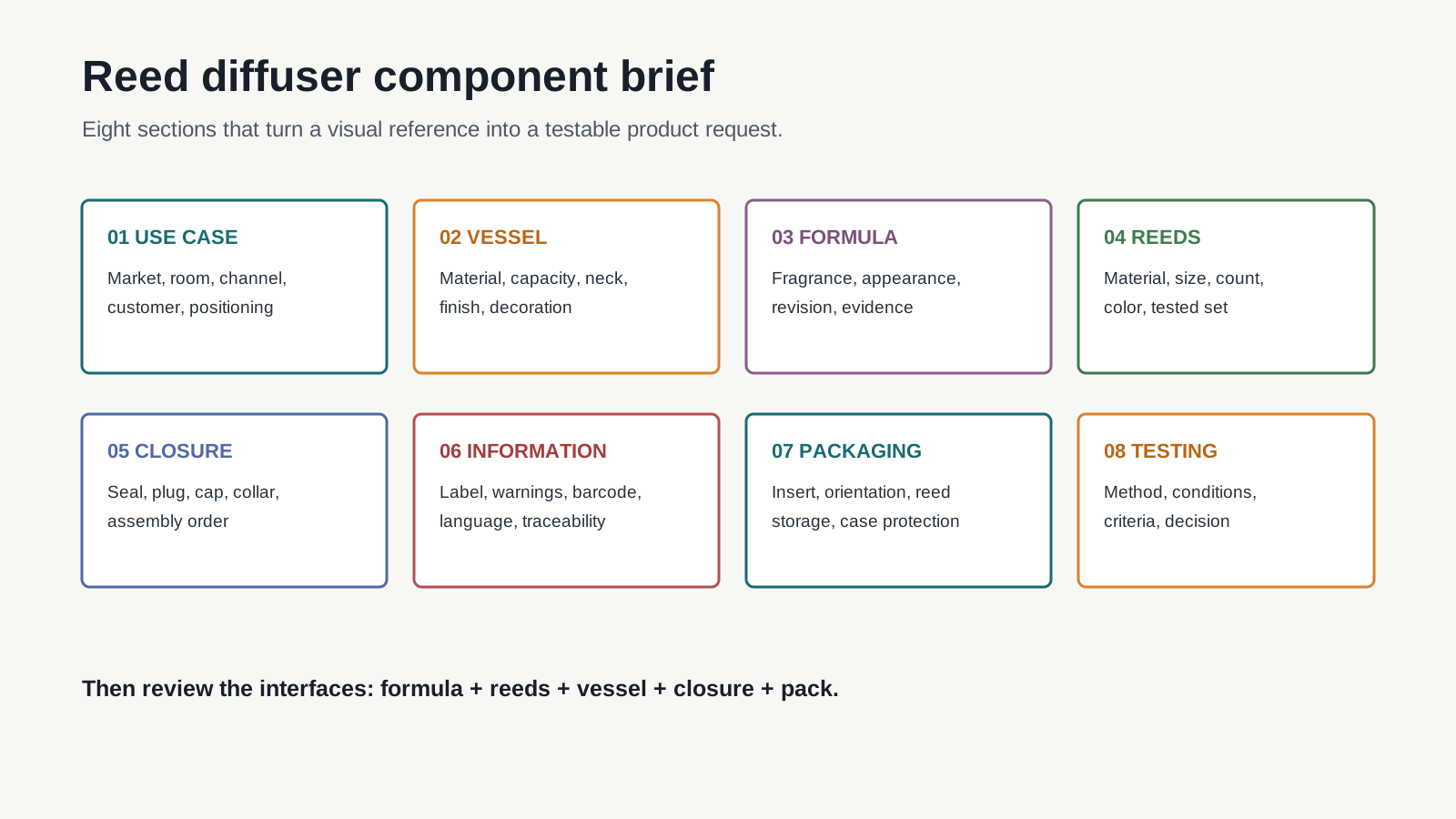
Before requesting a sample or quotation, prepare one page with:
- Use case: target customer, room context, market, channel, and positioning.
- Vessel: material, capacity, dimensions, neck, finish, and decoration.
- Formula: fragrance direction, appearance, revision, and required evidence.
- Reeds: material, size, count, color, and tested configuration.
- Closure system: every sealing and decorative component in assembly order.
- Information: label, warning, barcode, language, and traceability needs.
- Packaging: insert, reed storage, orientation, case pack, and protection.
- Test conditions: what will be measured, where, for how long, and against which approval criteria.
Use Arovi's quote request checklist to align quantities, variants, packaging, market, and commercial assumptions. Use the private label, white label, OEM, and ODM comparison if the development route is still unclear.
Choose the System Before Styling the Details
A reed diffuser is simple to use because its complexity has been resolved before it reaches the customer. The vessel stores, the reeds move, the formula releases, and the closure and packaging protect. Development should prove those jobs together before visual details are treated as final.
Explore Arovi's Home Fragrance category and start a project with your market, target quantity range, fragrance direction, vessel reference, reed preference, packaging format, and target date. Component availability, formula, performance, documentation, MOQ, pricing, and timing require project-specific confirmation.
Sources
- University of Wisconsin-Milwaukee College of Engineering: The Science of Wicking in Air Fresheners, accessed July 22, 2026.
- International Fragrance Association: Understanding the IFRA Standards, accessed July 22, 2026.
- International Fragrance Association: Guidance for the Use of IFRA Standards, accessed July 22, 2026.
- European Chemicals Agency: Understanding CLP, accessed July 22, 2026.
- European Chemicals Agency: Generate and Apply the UFI, accessed July 22, 2026.