

For the same project, how you frame the requirements can lead to vastly different price quotations, even when you speak to the same supplier.
Consider two requests for one candle project:
Request one: "Please quote 1,000 custom candles."
Request two: "Please quote 1,000 candles in two scents, 500 per scent, using an established glass vessel, a one-color label, and an individual retail box. Delivery is to Rotterdam for a September launch. The vessel is flexible; the label and box are required."
The intended project is the same. The information is not. With the first request, the supplier must fill the gaps with assumptions about the product, customization, packaging, and delivery. The second request creates a clearer scope, exposes the remaining questions, and gives both sides something concrete to discuss.
Before requesting a private-label quote, prepare the product, target market, quantity by variant, required and flexible customization, packaging, reference files, budget context, target date, and delivery destination. Mark each input as confirmed, estimated, or open, and ask the supplier to identify assumptions, inclusions, and exclusions.
Private-Label Quote Request Checklist
Prepare these ten sections:
| Section | What to include | Why it affects the quotation |
|---|---|---|
| Buyer and brand | Company, brand, contact, website or channel | Establishes who is buying and how the product will be sold |
| Customer and market | Intended user, use case, price position, destination market | Gives context for product, packaging, and market questions |
| Product | Category, format, size or capacity, materials or performance direction | Defines the item being assessed |
| Variants and quantity | Total quantity and split by product, size, scent, color, or design | Shows how demand is divided across components and production setups |
| Customization | Required, preferred, and open elements | Separates the central concept from negotiable choices |
| Packaging | Product container, label, individual box, set box, insert, and shipping protection | Prevents packaging scope from being omitted or interpreted differently |
| References | Annotated images, drawings, samples, artwork, or mood boards | Makes visual and functional intent easier to understand |
| Commercial context | Budget range, target cost, or intended retail and wholesale position | Helps screen out routes that do not fit the project |
| Timing and destination | Target launch date, required delivery point, country, and postal code when relevant | Frames development, production, and freight questions |
| Review requirements | Barcodes, languages, claims, testing, documents, inspections, or market questions | Identifies matters that require confirmation before an offer can be finalized |
A quotation can only be as precise as the request behind it. The University of Illinois procurement guidance makes the same point in formal purchasing: define mandatory and desirable requirements, quantities, delivery schedules, pricing format, and the basis for evaluation.
Mark Each Decision: Confirmed, Estimated, or Open
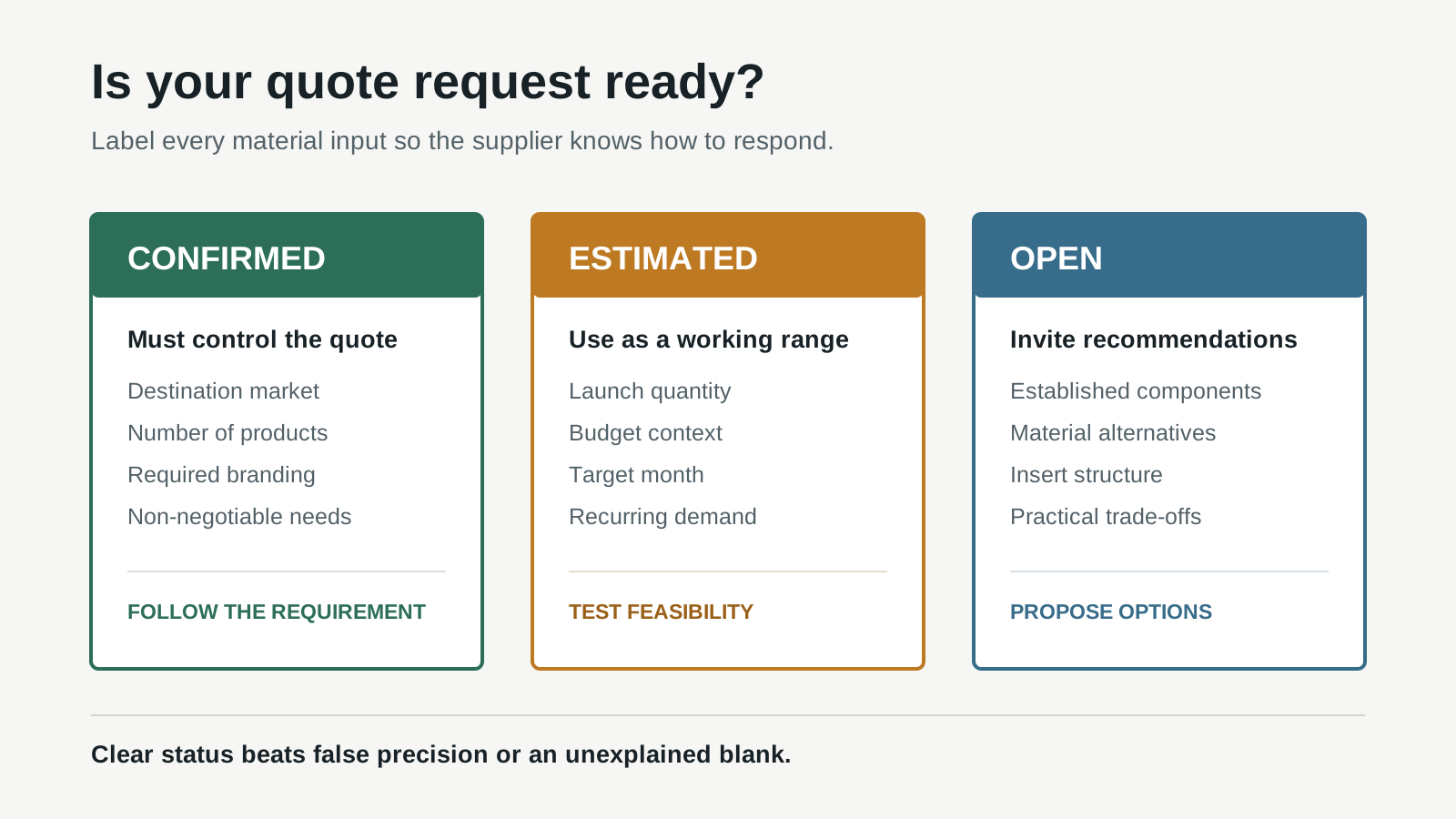
Not every decision needs to be final. It does need a label. Making uncertain details look fixed creates false precision; leaving them blank makes the supplier guess whether they are missing or flexible.
Label each important input:
- Confirmed: a requirement that should control the quotation, such as the destination country or number of designs.
- Estimated: a working range that may change, such as expected launch quantity or target month.
- Open: an area where you want the supplier to recommend feasible options.
For example:
| Input | Status | Example |
|---|---|---|
| Product | Confirmed | Three coordinated home-fragrance products |
| Launch quantity | Estimated | 1,000-1,500 retail units in total |
| Vessel | Open | Established options that fit the agreed visual direction |
| Branding | Confirmed | Buyer-provided logo and coordinated label system |
| Insert structure | Open | Supplier to recommend after products are selected |
The three labels create a simple working agreement: follow the confirmed requirements, test the estimates, and propose options where the brief is open.
Lead With the Product Idea, Then Add Technical Detail
Before listing components and finishes, explain what the product is meant to be. Start with one plain-language sentence covering the product, customer, and sales context:
A three-scent candle collection for a premium hotel gift shop, using one vessel shape and coordinated individual boxes.
Then add what you know:
- Product type and intended use
- Size, capacity, or dimensions
- Preferred materials or components
- Color, scent, texture, finish, or functional direction
- Number of products and variants
- Requirements that must be met
- Choices that may change
The more complex the product, the more easily a short description can hide different interpretations. Oklahoma State University's guidance on writing specifications notes that complex purchases need fuller descriptions so suppliers can understand the intended result. For an early private-label enquiry, the answer is not to invent technical details. It is to separate what you know from what still needs development.
Break Quantity Down by Variant
1,200 units can describe several very different jobs. Explain whether it means:
- One product with one design
- Four scents with 300 units each
- Three products with 400 units each
- Gift sets containing several components
Also say whether the quantity is an initial trial, a launch order, or an estimate for recurring demand. If you can consider a higher quantity when a component requires it, state that as flexibility rather than a commitment.
Instead of asking only, "What is your MOQ?", ask which product, decoration, packaging, or variant creates the quantity requirement. This turns MOQ from a mysterious supplier number into a project variable you can understand and discuss.
Protect the Core Idea and Keep the Rest Flexible
Treat customization as a hierarchy, not a wish list. Group each request into three levels:
- Required: the concept or market cannot work without it.
- Preferred: it supports the brand but may be adjusted.
- Open: the supplier may recommend an established solution.
This prevents a color preference or mood-board detail from being treated like a fixed engineering requirement. It also gives the supplier room to suggest a simpler route without weakening the central idea.
Apply the same logic to packaging. Specify whether the quote should cover the product container, decoration, label, individual retail box, gift-set box, insert, protective materials, and shipping carton. If you do not know the structure, describe the retail presentation and protection needed, then mark the construction as open.
Annotate References Without Asking for a Copy
A reference image is useful when it points to a decision, not when it simply says "copy this." Add a note explaining what matters:
We like the low cylindrical shape and matte finish. We do not want to copy the brand, artwork, or exact color.
References can communicate proportion, material, finish, decoration, packaging structure, layout, or mood. They should not imply that you own another company's work or want an exact reproduction. WIPO explains that industrial-design protection concerns a product's visual appearance and may allow a rights holder to prevent commercial exploitation of a copy or substantial copy. Point to the quality you want, then develop an ownable result.
Bring Market Questions Forward, Not After the Quote
A product can look fully defined and still carry unresolved market questions. Tell the supplier where it will be sold and flag anything concerning labeling, language, claims, barcodes, testing, documentation, or inspection.
Do not write "must be certified" without identifying the product, destination, channel, and applicable requirement. Ask what information or documentation is available and what still requires confirmation by the appropriate specialist.
For retail identification, GS1 states that the brand owner normally allocates the GTIN, regardless of where the product is manufactured. If your project needs barcodes, confirm who owns the brand, who will allocate the numbers, and which product and packaging levels need identification.
A Launch Date Is Not a Delivery Instruction
"Launch in September" sounds clear, but it does not tell a supplier when goods must arrive or what must happen first. Work backward and distinguish:
- Desired retail launch
- Required arrival date
- Delivery country and location
- Time needed for samples and approvals
- Whether freight is included in the requested quotation
For international quotations, ask suppliers to state the named delivery point and trade term. The International Chamber of Commerce explains that Incoterms rules allocate defined transport costs, risks, insurance responsibilities, and customs formalities between seller and buyer. A price labeled only "FOB" or "delivered" is incomplete without the relevant named place and agreed rule version.
Look Beyond the Unit Price
The unit price is the most visible number in a quotation and often the least informative on its own. Ask the supplier to show what the offer covers:
- Product and variant quoted
- Quantity basis
- Included customization and packaging
- Sample, development, tooling, testing, or inspection items, where applicable
- Delivery basis and destination
- Expected milestones or lead-time assumptions
- Payment terms and quotation validity
- Exclusions, alternatives, and unresolved questions
The U.S. International Trade Administration's guidance on quotations and pro forma invoices includes detailed product information, pricing, shipment timing, terms of sale, and payment terms. Those details turn a price into an offer that can be understood.
How to Compare Private-Label Quotations Fairly
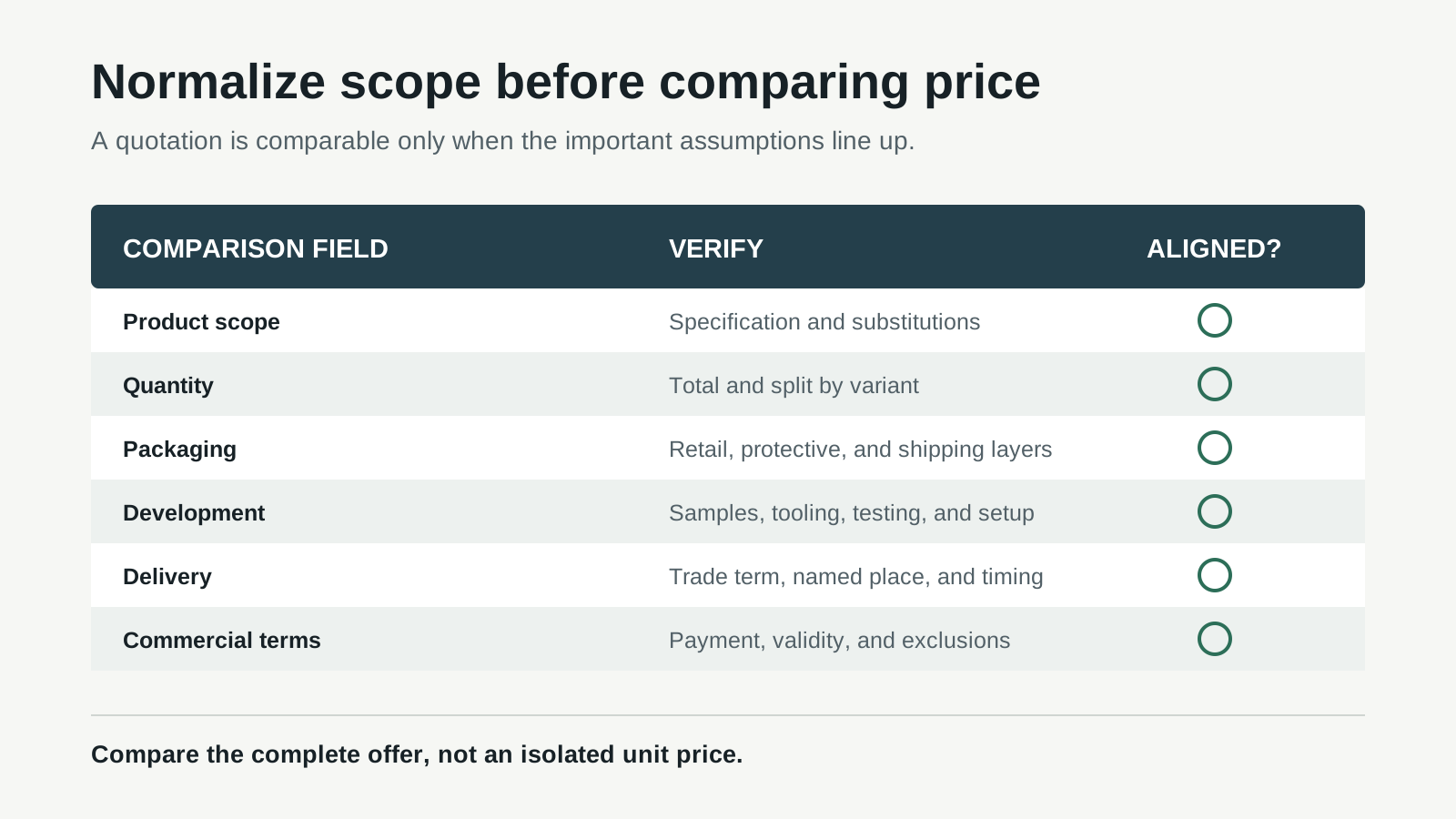
Do not compare the headline prices until the scope is aligned. Put each offer into the same grid:
| Comparison field | Supplier A | Supplier B | Supplier C |
|---|---|---|---|
| Product specification and substitutions | |||
| Quantity and variant split | |||
| Product decoration and packaging | |||
| Samples, development, tooling, or setup | |||
| Testing, inspection, and documentation | |||
| Trade term, named place, and freight | |||
| Timing assumptions | |||
| Payment terms and quote validity | |||
| Exclusions and open questions |
The World Bank's procurement guidance considers price alongside quality, delivery terms, and standardization. Although the guide addresses public procurement, the comparison principle applies here too: the lowest number is not necessarily the lowest-cost project when the specification, packaging, services, or delivery basis differs.
One-Page Quote Brief Example
Project:
Three-product home-fragrance gift collection

Customer and channel:
Premium lifestyle retailer; e-commerce and selected stores in [market].

Products:
One candle, one reed diffuser, and one room spray in a coordinated scent direction.

Quantity - estimated:
[Total range], with the expected split per product listed separately.

Required:
Buyer-provided brand artwork, coordinated labels, and retail gift-set presentation.

Preferred:
[Color, finish, scent, or material direction].

Open:
Established vessel and closure options; insert structure to be recommended.

Packaging:
Individual protection plus one retail gift box.

References:
Attached images annotated with the preferred shape, finish, and layout elements.

Commercial context:
[Budget range, target cost, or intended retail/wholesale position].

Timing and destination:
Target launch [month/year]; delivery to [country/city/postal code].

Please state:
Quoted specification, quantity basis, inclusions, exclusions, alternatives,
samples or development steps, delivery basis, timing assumptions, payment terms,
quotation validity, and questions requiring confirmation.
Replace the brackets with your project information. The example should organize the conversation, not pretend that every private-label project follows one specification.
Can You Request a Quote Without Final Specifications?
Yes. Give the supplier your best current direction and mark uncertain inputs as estimated or open. That is enough to explore feasible routes and identify the decisions needed for firmer pricing. An early figure should remain conditional while the specification, packaging, testing, or delivery basis is changing.
Should You Share a Budget?
A budget range or target cost can save both sides from developing an unsuitable route. If you prefer not to disclose a ceiling, provide the intended retail or wholesale position and rank your priorities. For example: protect the packaging appearance first, use an established vessel if needed, and simplify secondary decoration before changing the core product.
Turn the Idea Into a Quote-Ready Brief
Use the ten-section checklist, label each input as confirmed, estimated, or open, and attach annotated references. The goal is not to make the project look finished. It is to make the next conversation specific enough to move forward.
For the broader planning process, read How to Start a Private Label Brand. If the development route is still unclear, compare Private Label, White Label, OEM, and ODM. When your brief is ready, use Start A Project to share the product, market, quantity, customization, packaging, timing, and destination information. Feasibility and commercial terms remain subject to project-specific review.
Sources
- U.S. International Trade Administration, Pro Forma Invoice, accessed 2026-07-19.
- International Chamber of Commerce, Incoterms and Commercial Contracts, accessed 2026-07-19.
- World Bank, Procurement of Goods, Works, and Services: Guide, section 4.4, accessed 2026-07-19.
- University of Illinois System, Creating Request for Proposal Specifications, accessed 2026-07-19.
- Oklahoma State University Extension, Writing Specifications, accessed 2026-07-19.
- GS1, Who Is Responsible for Numbering Trade Items?, accessed 2026-07-19.
- World Intellectual Property Organization, A Guide to the Main WIPO Services, accessed 2026-07-19.