
Starting a private label brand begins with three decisions: who the product is for, what problem it solves, and why it deserves a place in the market.
Once those answers are clear, turn the idea into a focused product concept and a manufacturer-ready brief. That brief gives potential partners enough information to assess the product, customization, packaging, quantity, and approval process.
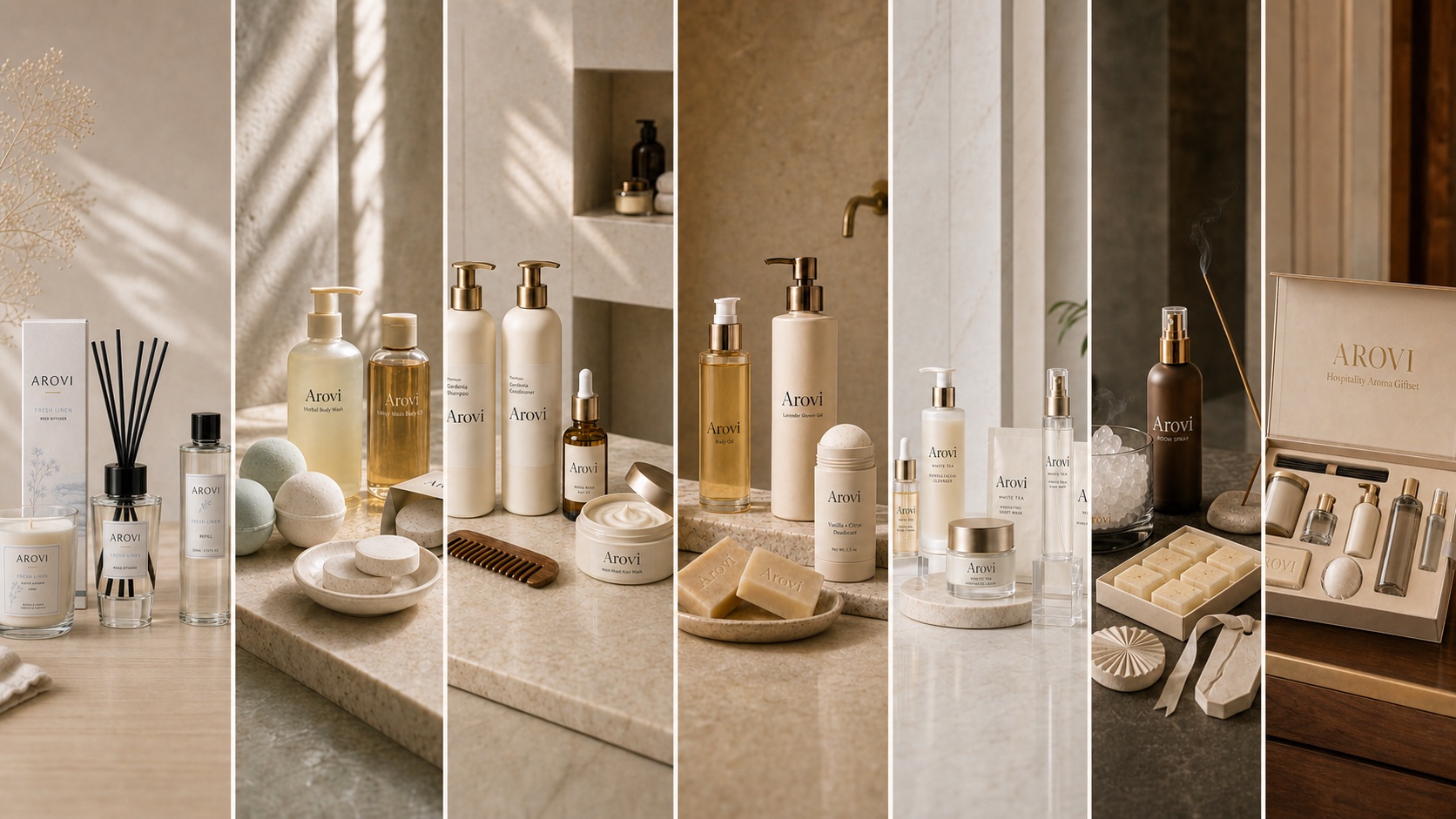
This guide covers the decisions needed before and during sourcing. It applies to buyers developing products across Arovi Group's private-label lifestyle categories, including Home Fragrance, Bath & Body, Hair Care, Facial Care, Scented Decor, and Hospitality and Gift Set.
What Is a Private Label Brand?
A private-label product is made by a third-party supplier or manufacturing partner and sold under the buyer's brand. The brand owner controls the market-facing identity and makes decisions about the target customer, product position, packaging, artwork, and sales channel.
The amount of product development can vary. Some brands begin with an established product and custom label. Others change selected components or packaging. More complex projects may involve new specifications, molds, formulas, or coordinated collections.
Private label therefore describes whose brand is on the product. It does not automatically tell you how customized or exclusive the product will be.
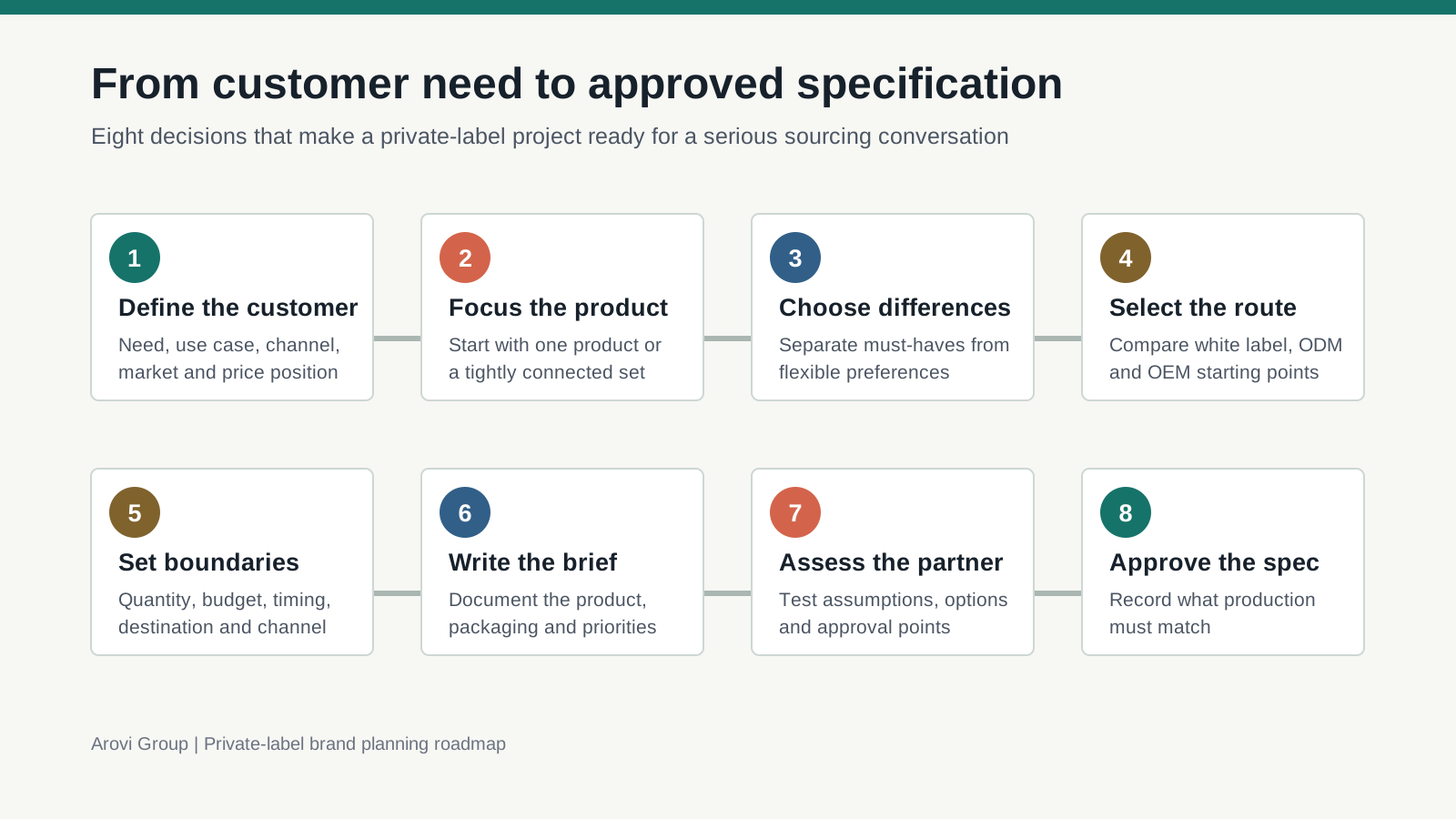
Step 1: Define the Customer Before the Product
Start with a customer and use case, not a broad product category. "I want to sell candles" is not yet a useful product direction. A stronger starting point identifies:
- Who is expected to buy or use the product
- Where it will be sold
- The occasion or problem it addresses
- The expected price position
- The destination market
- Why a buyer would choose it over familiar alternatives
This does not require a long market-research report. It does require enough evidence to avoid building a product around personal taste alone. Review competing offers, customer feedback, channel expectations, and gaps you can describe clearly. The U.S. Small Business Administration's guidance on market research and competitive analysis provides a useful starting framework.
Step 2: Choose a Focused First Product
A first collection should be narrow enough to develop and explain well. Choose:
- One main product or a tightly connected set
- A clear target customer
- A small number of meaningful differences
- A packaging direction that fits the channel
- A realistic quantity and budget range
A focused product is easier to sample, compare, price, photograph, launch, and improve. Adding more fragrances, sizes, colors, or packaging formats multiplies decisions and can make the first project harder to control.
For multi-product gift or hospitality projects, begin with the use case and collection logic. Decide why the products belong together before designing the box.
Step 3: Decide What Must Be Distinctive
Not every component needs to be custom. Identify the few elements that carry the brand idea. These may include:
- Product format or function
- Scent, color, texture, or finish
- Container or component style
- Label and decoration
- Individual packaging
- Gift-set structure
- Product name and written claims
Separate must-have differences from preferences. This gives a sourcing partner room to propose practical routes without losing the core idea.
Before committing a name and artwork to packaging, check whether similar trademarks are already used for related goods in the markets you plan to enter. A domain or company-name registration is not the same as trademark clearance. The U.S. Patent and Trademark Office provides an introduction to trademark basics and its trademark search system.
Step 4: Choose the Right Development Model
Private label, white label, OEM, and ODM are often discussed as separate choices, but they describe different parts of the relationship.
| Starting situation | Route to explore | What to confirm |
|---|---|---|
| You want to test a category with minimal product changes | Existing or white-label product with your branding | Who else can buy the same product and what branding can change |
| You want an established base with selected changes | Private-label or ODM-style route | Which components can change and who owns the resulting design |
| You have a detailed product specification or protected design | OEM-style production | Whether the specification is production-ready and how tooling or intellectual property is handled |
| You want several products developed as one collection | Coordinated development route | Product mix, shared packaging system, approval sequence, and supplier coordination |
Do not rely on the model name alone. Ask what already exists, what can change, what you must provide, and what remains exclusive or reusable.
For a fuller comparison, read Private Label vs White Label vs OEM vs ODM.
Step 5: Set Commercial Boundaries Before Requesting Quotes
A potential partner cannot assess a project well without knowing its boundaries. Prepare ranges where exact figures are not yet available. Clarify:
- Expected order quantity
- Target retail or wholesale position
- Budget context
- Target launch date
- Destination country
- Sales channel
- Required packaging level
- Testing or documentation questions
These inputs affect the available product and packaging routes. They are not promises or final specifications.
Avoid choosing a product only from an attractive unit price. Compare the complete project: samples, product, packaging, decoration, testing, inspection, freight, duties, launch assets, and the cost of changes or delays.
Use the Private-Label Quote Request Checklist to organize the assumptions and inclusions before comparing offers.
Step 6: Prepare a Manufacturer-Ready Brief
A useful first brief can fit on one page.
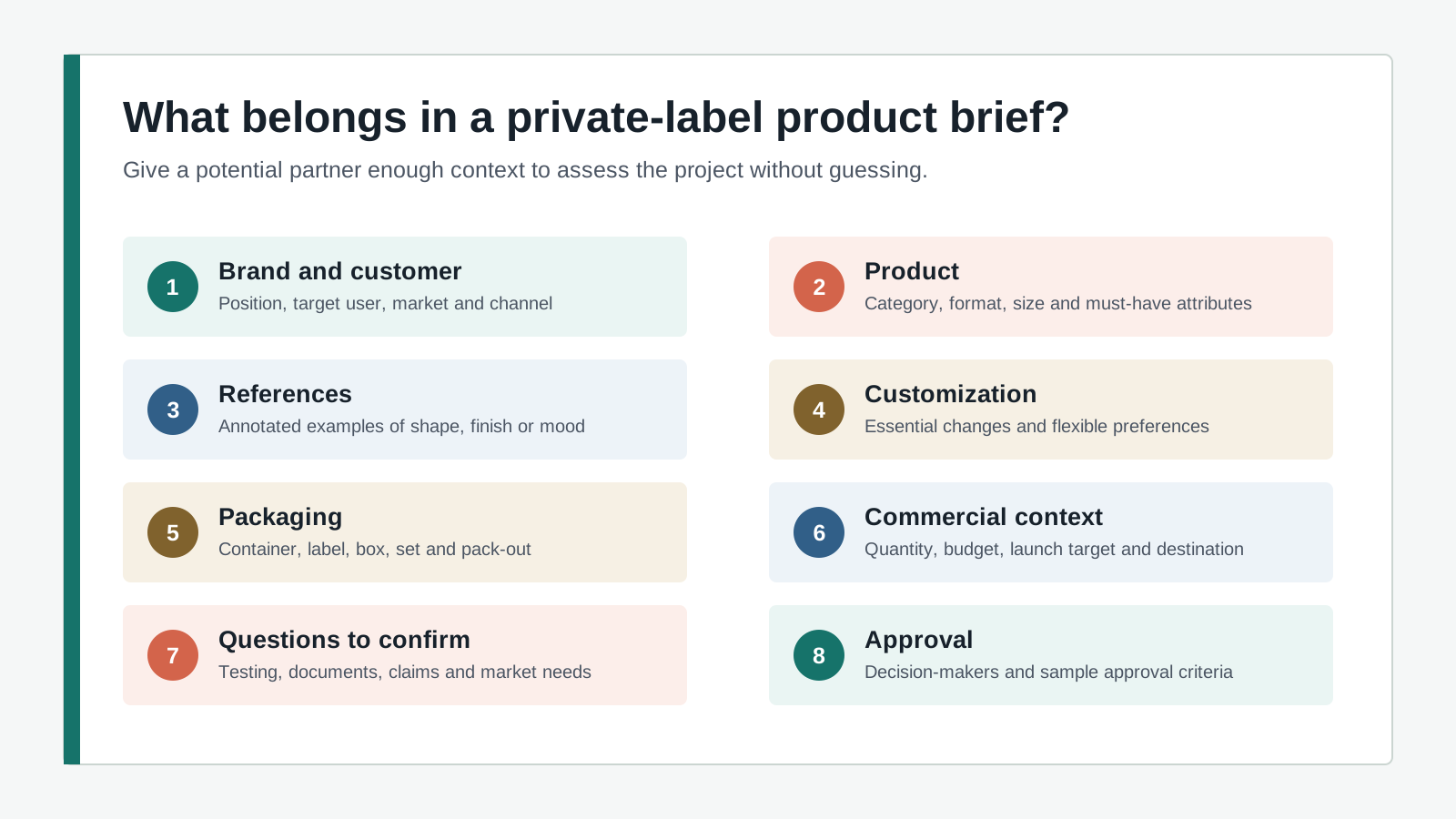
| Brief section | What to include |
|---|---|
| Brand and customer | Brand position, target user, market, and channel |
| Product | Category, format, size direction, and must-have attributes |
| References | Images or examples with notes explaining what you like |
| Customization | Essential changes and flexible preferences |
| Packaging | Container, label, individual box, set, and shipping presentation |
| Commercial context | Quantity range, budget context, launch target, and destination |
| Questions to confirm | Testing, documentation, claims, or market requirements |
| Approval | Decision-makers and sample-approval criteria |
Reference images are useful only when annotated. A potential partner should know whether you are pointing to the shape, color, material, finish, layout, or overall mood.
Step 7: Assess the Partner, Not Just the Product
A useful sourcing conversation should make the project clearer. Ask:
- Which parts of the proposed product already exist?
- Which parts require new development?
- What can change at the expected quantity?
- What information is still missing?
- What samples or prototypes are needed?
- What will be tested, inspected, or documented?
- Which assumptions are included in the quotation?
- What must be approved before production?
Look for specific answers and visible decision points. A confident "yes" is less useful than a clear explanation of what is feasible, conditional, or still unknown.
Step 8: Approve a Specification, Not Just a Sample
A sample is part of the approval process, but it should not be the only record of what was agreed. Before production, confirm the applicable:
- Product specification
- Components and materials
- Color, scent, texture, or finish references
- Artwork and print files
- Packaging structure and pack-out
- Label content and market requirements
- Approved sample or reference standard
- Quality checkpoints
- Quantity and commercial terms
- Shipping and delivery responsibilities
The exact list depends on the product. Changes made after approval may affect feasibility, cost, or timing, so each revision should be recorded.
What Can Change the Starting Plan?
Private-label projects often change when the buyer learns more about quantity requirements for a component or decoration, packaging structure, print method, testing, tooling, material availability, samples, artwork, approval speed, production scheduling, or shipping.
A change is not automatically a problem. The aim is to discover important constraints before production rather than after inventory has been made.
Ready to move forward?
Turn the idea into a useful project brief.
Arovi Group is a China-based private-label product development and sourcing partner. Buyers can begin with a product idea, reference, collection concept, or structured brief.
Sources
- U.S. Small Business Administration, Market research and competitive analysis, accessed 17 July 2026.
- U.S. Patent and Trademark Office, Trademark basics, accessed 17 July 2026.
- U.S. Patent and Trademark Office, Search our trademark database, accessed 17 July 2026.